Showing posts with label photoeye. Show all posts

Friday

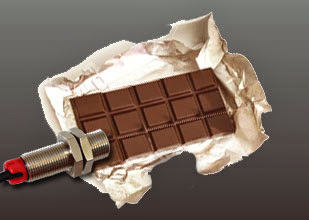
How to Use Sensors to Detect that Contents are Missing from Foil Wrappers

http://www.pantron.com/us/pantron-complete-set.html
An application to detect if the contents of a foil wrapper are missing is fairly easy to solve using two sets of industrial grade high-powered infrared photoelectric sensors.

Many industries use foil wrappers to package products. For quality control, it is a good idea to have a system capable of automatically detecting when the contents of those wrappers are missing. Some companies use human beings to manually pick and choose wrappers, which is tedious, and not very efficient. There is a solution that really works; infrared photoelectric sensors.

Position one set of infrared photoelectric sensors in a through-beam configuration, so that the foil wrapper will move between the sensors at a given point. Adjust the sensitivity of the infrared photoelectric sensors so that they will detect the foil wrapper whether it is full or empty. The sensors should be at their most sensitive setting for this. The output from this set of sensors will report to the PLC to let it know when a foil wrapper is present.

Position the second set of infrared photoelectric sensors beside the first set, also in a through-beam configuration and facing the same direction. Be sure that the sensors are set to different frequencies to avoid cross-talk between the two sets. This set of sensors should be adjusted to its least sensitive setting. In other words, crank the gain setting to the max. Assuming that the photoelectric sensors being used are industrial grade, they should be able to see through an empty wrapper easily, but not one containing product. This set should also report to the PLC.

Now, you have two infrared beams of light striking the foil wrapper as it passed. One is used as a reference to let the PLC know when a foil wrapper is present. The second set of sensors lets the PLC know when a foil wrapper is missing its expected contents. This system is very reliable and is in use at a number of companies worldwide.


Related products and information
Stainless-steel infrared photoelectric sensors for packaging applications

Wednesday

How to Replace an Air Pressure Hose Switch with Non-contact Photoelectric Sensors

Businesses which use hoses attached to pressure sensors to detect vehicles would benefit from upgrading this system to an infrared photoelectric sensor system.

If you are old enough to remember full-service gas stations, you probably remember that when a car or truck drove up, the tires would run over a long hose and a bell would sound alerting the attendant that a customer had arrived. The same principle of using a hose and air pressure to activate a switch is still used by many companies in a number of ways.

Air hoses may be used to conduct a traffic count for demographic studies by stretching the hose across a lane of traffic. They are also used to open automatic doors and gates. The basic idea behind the operation of these devices is simple. When an object applies pressure to the hose, the air is forced to one end. The pressure of the moving air moves a switch. This switch may be used to control almost any electronic device.

The problem with the air hose is that over time, the hose and the mechanical switch wear out. Also, it is very easy for the hose to be moved out-of-place. An alternative to this system is to use an industrial grade infrared photoelectric sensor system. Using non-contact photoelectric sensors provides an installation that is both tidy and easy to maintain. Because there is no physical contact with the detected object, there are no moving parts to wear out.

Replacing an air hose system with an industrial grade infrared photoelectric sensor system is easy. The photoelectric controller (also referred to as an amplifier) replaces the air hose controller. Many photoelectric controllers have built-in relay switches, making the transition simple. The infrared photoelectric sensors may be placed in a through beam configuration or diffuse proximity (both sensors on the same side) configuration depending on space and wiring requirements. The transition from the old style air hoses to the new photoelectric sensors is easy, quick, and a wise investment.

Related products and information
Infrared photoelectric sensors for driveway applications
Infrared photoelectric amplifier for use with photoelectric sensors
Loop detector and in-ground inductive loop for sensing vehicles

Sunday

How to Measure Length and Diameter of an Object Travelling on a Conveyor

An application which requires an object to be measured for length and diameter as it travels along a conveyor belt may be solved using two types of sensors and a PLC.

Position a set of photoelectric sensors in a through-beam configuration so that the infrared beam crosses the conveyor. The object to be detected should break the beam as it travels. The photoelectric sensors will be used to measure the length of the object and also to trigger the measurement of the diameter by the ultrasonic sensor.

The ultrasonic sensor should be positioned above the conveyor facing downward and it should be well out of striking distance. The analog output from the ultrasonic sensor will be sent to the PLC, which should be programmed to calculate the diameter of the post based upon the sensor’s output.

The output from the photoelectric sensor actually serves two purposes. First, it will send a signal to the PLC indicating that the object is present. The PLC will then acknowledge the output from the ultrasonic sensor and begin its calculation. At the same time, the photoelectric sensors will help the PLC determine the length of the object using a calculation based upon the speed of the conveyor and the amount of time that the photoelectric sensors are blocked.

Though it sounds complicated, the hardest part of the application is the programming of the PLC, which should only be done by a trained professional. The benefits of using this equipment to solve the application are that the sensors are easy to install and they perform efficiently and reliably. Both measurements are done without physically contacting the object, so there are no moving parts to wear down.

Related products and information
Infrared photoelectric sensors for conveyor applications
Infrared photoelectric multiplexer for mutiple sets of photoelectric sensors